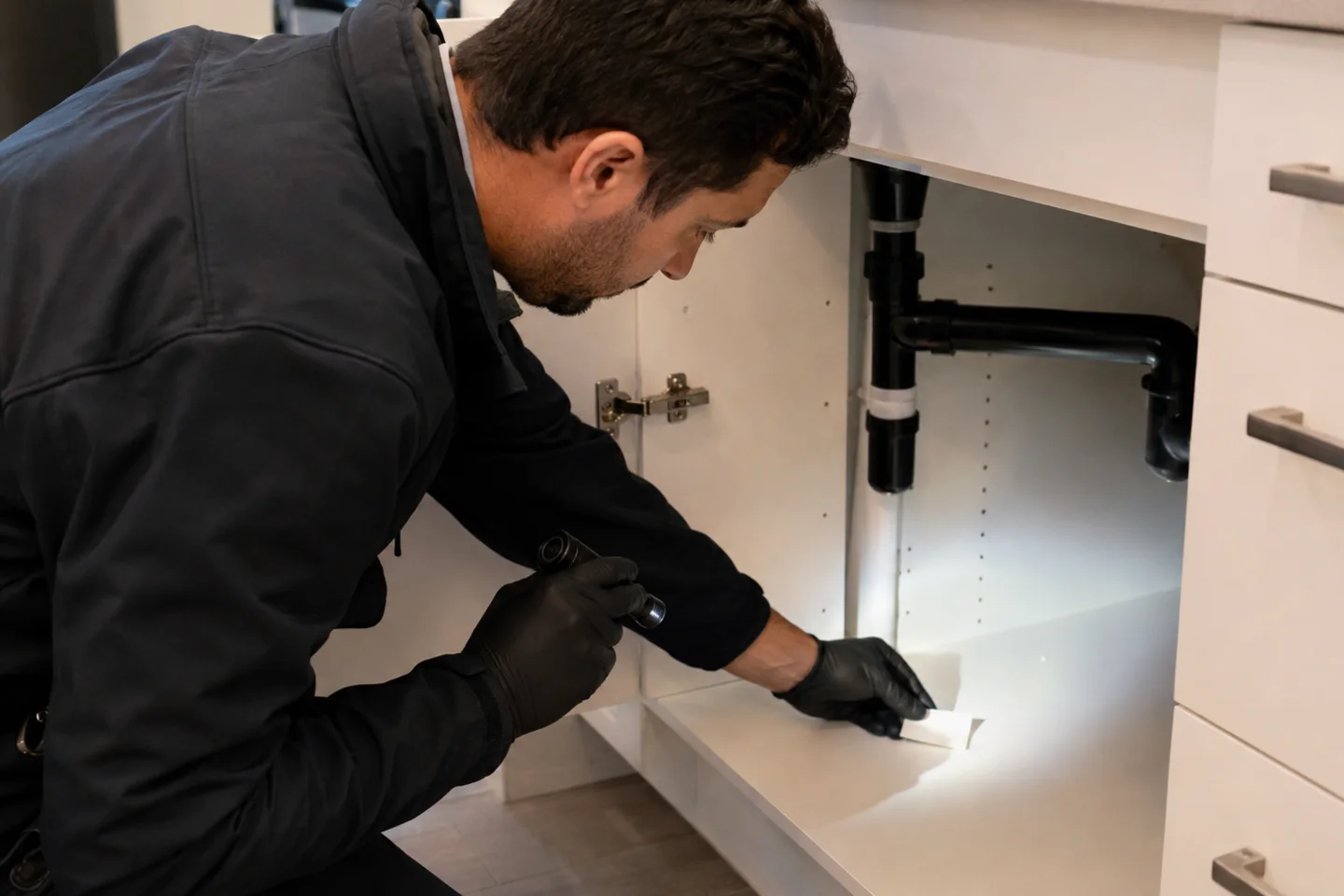
Coordinate identification, moisture and food conditions, connected service routes, unit access and monitoring records. The objective is a documented question set a qualified operator can inspect, not remote treatment advice.
Identify the cockroach species
Identify the cockroach species is a practical part of Cockroach control in multi-unit Toronto buildings. Begin with facts another person can verify: the specimen or sign, exact room or exterior zone, date, activity timing, property type, occupant conditions and any connected-unit or building-management issue. Preserve context with clear photographs and notes when it is safe. Do not turn bites, sounds, droppings or a single image into a confident species diagnosis, severity rating, exposure conclusion or treatment recommendation before an appropriate inspection.
For step 1, separate observation, interpretation and authorization. Ask how the finding affects inspection areas, monitoring, exclusion, licensed treatment, preparation or follow-up, then put the approved direction in the service record. Only the verified operator may select products or methods and issue preparation, ventilation, re-entry and disposal instructions for the site. If evidence, occupancy, access or activity changes, report it and obtain a revised decision rather than adding an unapproved product or repeating generic advice. Record who made each decision, the date, the evidence considered and the condition that triggers reassessment.
Map kitchen and bathroom evidence
Map kitchen and bathroom evidence is a practical part of Cockroach control in multi-unit Toronto buildings. Begin with facts another person can verify: the specimen or sign, exact room or exterior zone, date, activity timing, property type, occupant conditions and any connected-unit or building-management issue. Preserve context with clear photographs and notes when it is safe. Do not turn bites, sounds, droppings or a single image into a confident species diagnosis, severity rating, exposure conclusion or treatment recommendation before an appropriate inspection.
For step 2, separate observation, interpretation and authorization. Ask how the finding affects inspection areas, monitoring, exclusion, licensed treatment, preparation or follow-up, then put the approved direction in the service record. Only the verified operator may select products or methods and issue preparation, ventilation, re-entry and disposal instructions for the site. If evidence, occupancy, access or activity changes, report it and obtain a revised decision rather than adding an unapproved product or repeating generic advice. Record who made each decision, the date, the evidence considered and the condition that triggers reassessment.
Record daytime and nighttime activity
Record daytime and nighttime activity is a practical part of Cockroach control in multi-unit Toronto buildings. Begin with facts another person can verify: the specimen or sign, exact room or exterior zone, date, activity timing, property type, occupant conditions and any connected-unit or building-management issue. Preserve context with clear photographs and notes when it is safe. Do not turn bites, sounds, droppings or a single image into a confident species diagnosis, severity rating, exposure conclusion or treatment recommendation before an appropriate inspection.
For step 3, separate observation, interpretation and authorization. Ask how the finding affects inspection areas, monitoring, exclusion, licensed treatment, preparation or follow-up, then put the approved direction in the service record. Only the verified operator may select products or methods and issue preparation, ventilation, re-entry and disposal instructions for the site. If evidence, occupancy, access or activity changes, report it and obtain a revised decision rather than adding an unapproved product or repeating generic advice. Record who made each decision, the date, the evidence considered and the condition that triggers reassessment.
Inspect moisture and appliance harbourage
Inspect moisture and appliance harbourage is a practical part of Cockroach control in multi-unit Toronto buildings. Begin with facts another person can verify: the specimen or sign, exact room or exterior zone, date, activity timing, property type, occupant conditions and any connected-unit or building-management issue. Preserve context with clear photographs and notes when it is safe. Do not turn bites, sounds, droppings or a single image into a confident species diagnosis, severity rating, exposure conclusion or treatment recommendation before an appropriate inspection.
For step 4, separate observation, interpretation and authorization. Ask how the finding affects inspection areas, monitoring, exclusion, licensed treatment, preparation or follow-up, then put the approved direction in the service record. Only the verified operator may select products or methods and issue preparation, ventilation, re-entry and disposal instructions for the site. If evidence, occupancy, access or activity changes, report it and obtain a revised decision rather than adding an unapproved product or repeating generic advice. Record who made each decision, the date, the evidence considered and the condition that triggers reassessment.
Trace plumbing and shared-wall routes
Trace plumbing and shared-wall routes is a practical part of Cockroach control in multi-unit Toronto buildings. Begin with facts another person can verify: the specimen or sign, exact room or exterior zone, date, activity timing, property type, occupant conditions and any connected-unit or building-management issue. Preserve context with clear photographs and notes when it is safe. Do not turn bites, sounds, droppings or a single image into a confident species diagnosis, severity rating, exposure conclusion or treatment recommendation before an appropriate inspection.
For step 5, separate observation, interpretation and authorization. Ask how the finding affects inspection areas, monitoring, exclusion, licensed treatment, preparation or follow-up, then put the approved direction in the service record. Only the verified operator may select products or methods and issue preparation, ventilation, re-entry and disposal instructions for the site. If evidence, occupancy, access or activity changes, report it and obtain a revised decision rather than adding an unapproved product or repeating generic advice. Record who made each decision, the date, the evidence considered and the condition that triggers reassessment.
Notify the authorized property contact
Notify the authorized property contact is a practical part of Cockroach control in multi-unit Toronto buildings. Begin with facts another person can verify: the specimen or sign, exact room or exterior zone, date, activity timing, property type, occupant conditions and any connected-unit or building-management issue. Preserve context with clear photographs and notes when it is safe. Do not turn bites, sounds, droppings or a single image into a confident species diagnosis, severity rating, exposure conclusion or treatment recommendation before an appropriate inspection.
For step 6, separate observation, interpretation and authorization. Ask how the finding affects inspection areas, monitoring, exclusion, licensed treatment, preparation or follow-up, then put the approved direction in the service record. Only the verified operator may select products or methods and issue preparation, ventilation, re-entry and disposal instructions for the site. If evidence, occupancy, access or activity changes, report it and obtain a revised decision rather than adding an unapproved product or repeating generic advice. Record who made each decision, the date, the evidence considered and the condition that triggers reassessment.
Coordinate adjacent-unit assessment
Coordinate adjacent-unit assessment is a practical part of Cockroach control in multi-unit Toronto buildings. Begin with facts another person can verify: the specimen or sign, exact room or exterior zone, date, activity timing, property type, occupant conditions and any connected-unit or building-management issue. Preserve context with clear photographs and notes when it is safe. Do not turn bites, sounds, droppings or a single image into a confident species diagnosis, severity rating, exposure conclusion or treatment recommendation before an appropriate inspection.
For step 7, separate observation, interpretation and authorization. Ask how the finding affects inspection areas, monitoring, exclusion, licensed treatment, preparation or follow-up, then put the approved direction in the service record. Only the verified operator may select products or methods and issue preparation, ventilation, re-entry and disposal instructions for the site. If evidence, occupancy, access or activity changes, report it and obtain a revised decision rather than adding an unapproved product or repeating generic advice. Record who made each decision, the date, the evidence considered and the condition that triggers reassessment.
Prepare without dispersing activity
Prepare without dispersing activity is a practical part of Cockroach control in multi-unit Toronto buildings. Begin with facts another person can verify: the specimen or sign, exact room or exterior zone, date, activity timing, property type, occupant conditions and any connected-unit or building-management issue. Preserve context with clear photographs and notes when it is safe. Do not turn bites, sounds, droppings or a single image into a confident species diagnosis, severity rating, exposure conclusion or treatment recommendation before an appropriate inspection.
For step 8, separate observation, interpretation and authorization. Ask how the finding affects inspection areas, monitoring, exclusion, licensed treatment, preparation or follow-up, then put the approved direction in the service record. Only the verified operator may select products or methods and issue preparation, ventilation, re-entry and disposal instructions for the site. If evidence, occupancy, access or activity changes, report it and obtain a revised decision rather than adding an unapproved product or repeating generic advice. Record who made each decision, the date, the evidence considered and the condition that triggers reassessment.
Use only approved control methods
Use only approved control methods is a practical part of Cockroach control in multi-unit Toronto buildings. Begin with facts another person can verify: the specimen or sign, exact room or exterior zone, date, activity timing, property type, occupant conditions and any connected-unit or building-management issue. Preserve context with clear photographs and notes when it is safe. Do not turn bites, sounds, droppings or a single image into a confident species diagnosis, severity rating, exposure conclusion or treatment recommendation before an appropriate inspection.
For step 9, separate observation, interpretation and authorization. Ask how the finding affects inspection areas, monitoring, exclusion, licensed treatment, preparation or follow-up, then put the approved direction in the service record. Only the verified operator may select products or methods and issue preparation, ventilation, re-entry and disposal instructions for the site. If evidence, occupancy, access or activity changes, report it and obtain a revised decision rather than adding an unapproved product or repeating generic advice. Record who made each decision, the date, the evidence considered and the condition that triggers reassessment.
Place monitoring points consistently
Place monitoring points consistently is a practical part of Cockroach control in multi-unit Toronto buildings. Begin with facts another person can verify: the specimen or sign, exact room or exterior zone, date, activity timing, property type, occupant conditions and any connected-unit or building-management issue. Preserve context with clear photographs and notes when it is safe. Do not turn bites, sounds, droppings or a single image into a confident species diagnosis, severity rating, exposure conclusion or treatment recommendation before an appropriate inspection.
For step 10, separate observation, interpretation and authorization. Ask how the finding affects inspection areas, monitoring, exclusion, licensed treatment, preparation or follow-up, then put the approved direction in the service record. Only the verified operator may select products or methods and issue preparation, ventilation, re-entry and disposal instructions for the site. If evidence, occupancy, access or activity changes, report it and obtain a revised decision rather than adding an unapproved product or repeating generic advice. Record who made each decision, the date, the evidence considered and the condition that triggers reassessment.
Document sanitation and repair actions
Document sanitation and repair actions is a practical part of Cockroach control in multi-unit Toronto buildings. Begin with facts another person can verify: the specimen or sign, exact room or exterior zone, date, activity timing, property type, occupant conditions and any connected-unit or building-management issue. Preserve context with clear photographs and notes when it is safe. Do not turn bites, sounds, droppings or a single image into a confident species diagnosis, severity rating, exposure conclusion or treatment recommendation before an appropriate inspection.
For step 11, separate observation, interpretation and authorization. Ask how the finding affects inspection areas, monitoring, exclusion, licensed treatment, preparation or follow-up, then put the approved direction in the service record. Only the verified operator may select products or methods and issue preparation, ventilation, re-entry and disposal instructions for the site. If evidence, occupancy, access or activity changes, report it and obtain a revised decision rather than adding an unapproved product or repeating generic advice. Record who made each decision, the date, the evidence considered and the condition that triggers reassessment.
Review trends across follow-up visits
Review trends across follow-up visits is a practical part of Cockroach control in multi-unit Toronto buildings. Begin with facts another person can verify: the specimen or sign, exact room or exterior zone, date, activity timing, property type, occupant conditions and any connected-unit or building-management issue. Preserve context with clear photographs and notes when it is safe. Do not turn bites, sounds, droppings or a single image into a confident species diagnosis, severity rating, exposure conclusion or treatment recommendation before an appropriate inspection.
For step 12, separate observation, interpretation and authorization. Ask how the finding affects inspection areas, monitoring, exclusion, licensed treatment, preparation or follow-up, then put the approved direction in the service record. Only the verified operator may select products or methods and issue preparation, ventilation, re-entry and disposal instructions for the site. If evidence, occupancy, access or activity changes, report it and obtain a revised decision rather than adding an unapproved product or repeating generic advice. Record who made each decision, the date, the evidence considered and the condition that triggers reassessment.